
Major Depressive Disorder (MDD) continues to present a significant clinical burden across Canada. While pharmacotherapy and standard psychotherapy remain first-line interventions, a substantial proportion of patients experience Treatment-Resistant Depression (TRD) or disabling side effects from antidepressant medications.
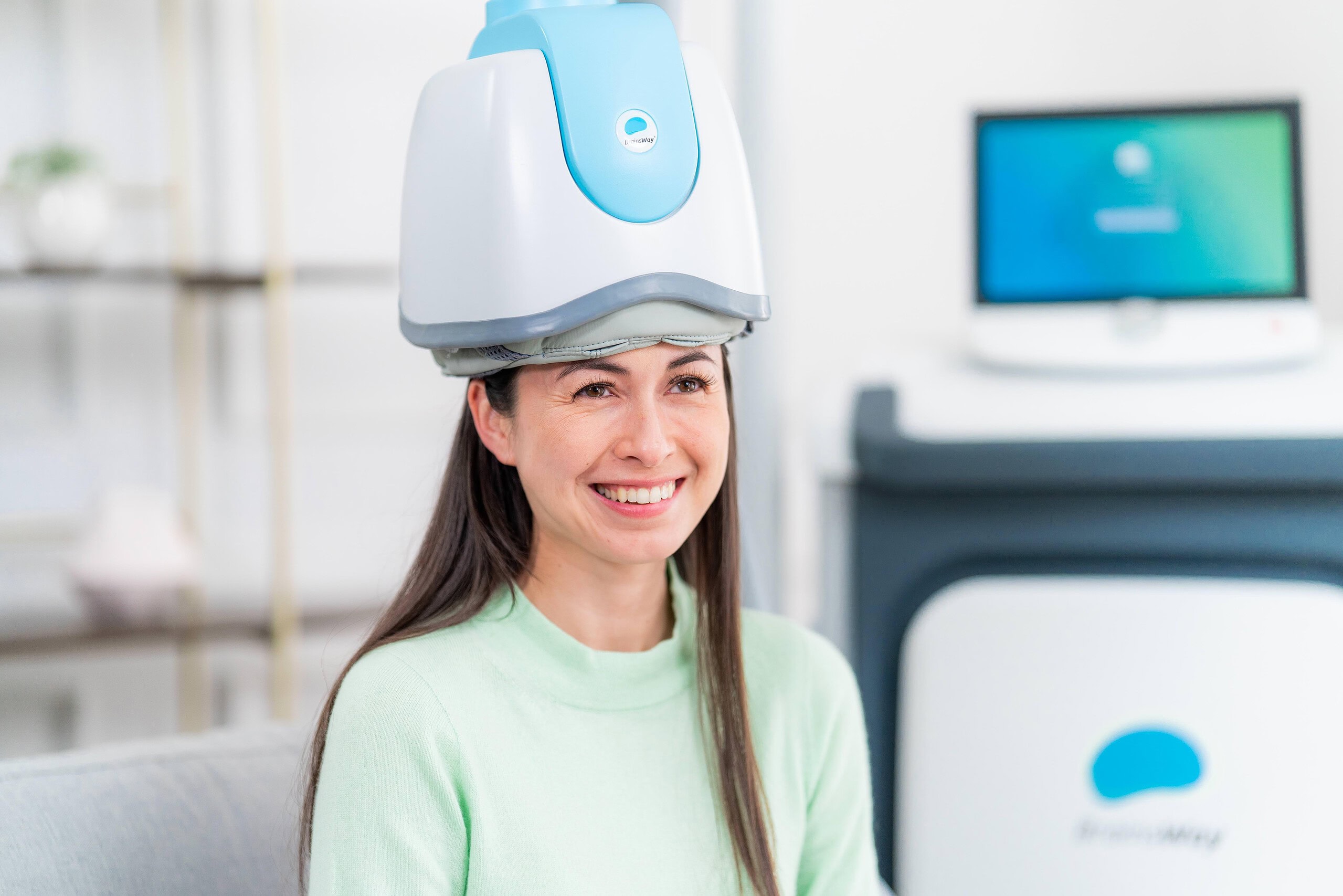
For Canadian mental health practitioners seeking evidence-based non-pharmacological alternatives, Deep Transcranial Magnetic Stimulation (Deep TMS™) utilizing the BrainsWay H1 Coil represents a major advance in interventional psychiatry.
A landmark post-marketing study published in Psychiatry Research (Tendler et al., 2023) evaluated real-world outcomes across 1,351 patients. The findings confirm that Deep TMS delivers high response and remission rates under naturalistic clinical conditions—mirroring and even exceeding results from randomized controlled trials (RCTs).
Key Real-World Clinical Findings
The study analyzed post-marketing data from 21 clinical sites to evaluate the effectiveness, time course, and durability of Deep TMS with the H1 Coil.
High Response and Remission Rates
In naturalistic community settings, patient outcomes were assessed after standard treatment courses:
-
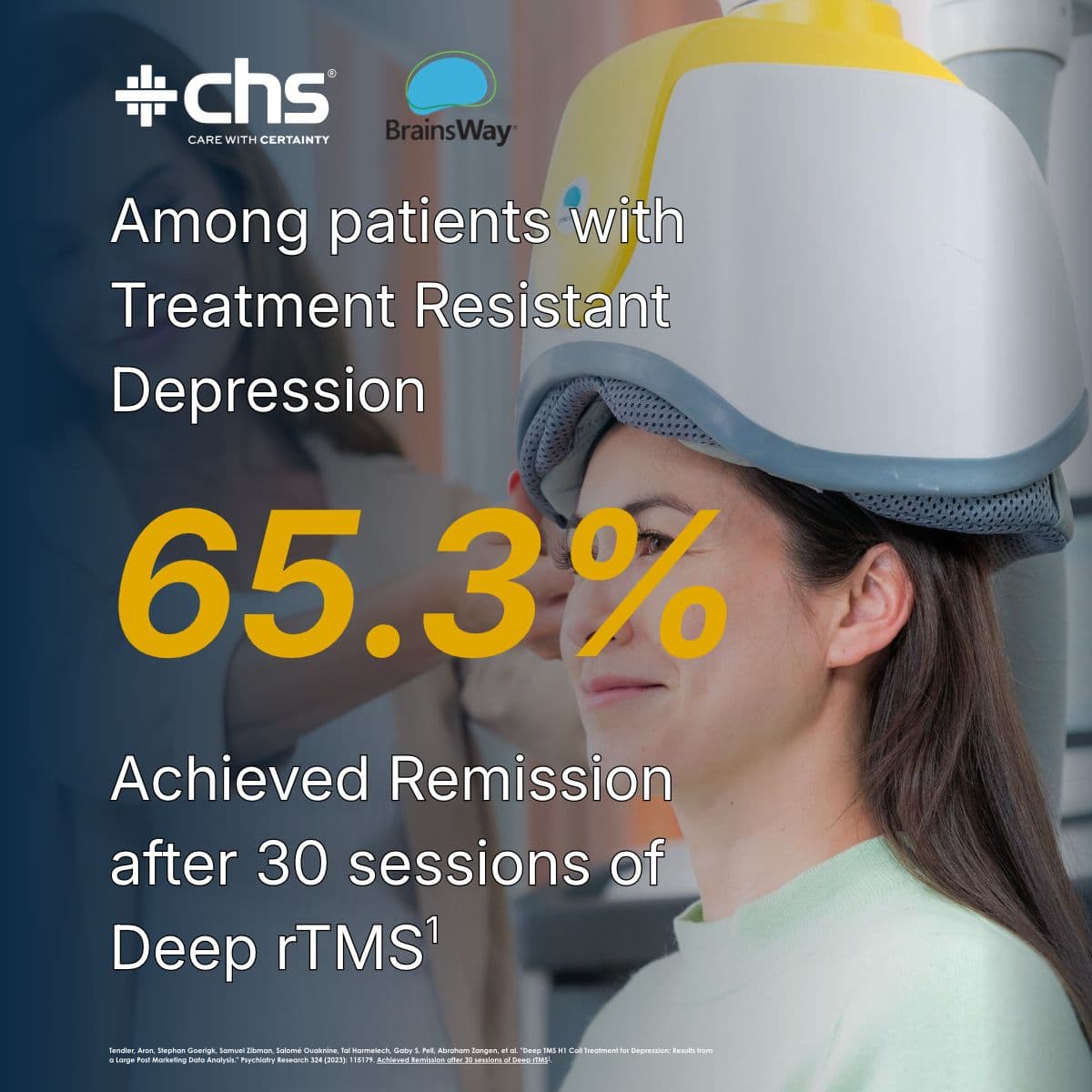
30 Sessions: Achieved an 81.6% response rate and a 65.3% remission rate across all clinical scales.
-
20 Sessions: Delivered a 73.6% response rate and a 58.1% remission rate.
-
Intermittent Theta Burst Stimulation (iTBS): Produced a 72.4% response rate and a 69.2% remission rate.
-
Clinician-Rated Scales (HDRS-21): Showed remission rates as high as 72%.
| Treatment Metric | 20 Sessions | 30 Sessions | iTBS Protocol |
| Response Rate | 73.6% | 81.6% | 72.4% |
| Remission Rate | 58.1% | 65.3% | 69.2% |
Rapid Onset of Action
Onset of sustained clinical improvement occurred rapidly during acute treatment:
-
Sustained Response: Reached at a median of 16 sessions (21 calendar days).
-
Sustained Remission: Reached at a median of 17 sessions (23 calendar days).
Extended Durability and Dose-Response Relationship
-
Sustained Efficacy: 84% of responders and 80% of remitters maintained their status on subsequent clinical evaluations.
-
Stimulation Intensity: Higher stimulation intensities correlated directly with superior clinical outcomes, highlighting the importance of proper MT (motor threshold) calibration and full-dose delivery.
-
Extended Protocols: Initial non-responders at 20 sessions frequently converted to response or remission when treatment was extended to 30 sessions, reinforcing the clinical value of full treatment courses.
Why the BrainsWay H1 Coil Architecture Matters
Traditional repetitive Transcranial Magnetic Stimulation (rTMS) uses figure-8 coils that target superficial focal areas of the dorsolateral prefrontal cortex (DLPFC).
In contrast, the patented BrainsWay H1 Coil is specifically engineered to target deeper and broader neural structures:
-
Deeper & Broader Neural Penetration: Reaches approximately 1.8 to 3.2 cm below the skull surface, stimulating deeper cortical regions and subcortical networks linked to the brain’s reward system without exceeding safe surface electrical thresholds.
-
Bilateral Prefrontal Stimulation: Modulates wider neuronal networks in the prefrontal cortex with higher intensity focused on the left side, optimizing network connectivity between the DLPFC and the subgenual anterior cingulate cortex (sgACC).
-
Reduced Positioning Error: The cushioned helmet design ensures consistent energy delivery across sessions, minimizing field degradation caused by slight head movements or mispositioning.
Clinical Implications for Canadian Healthcare Settings
Across Canada, public health authorities and private mental health clinics are actively working to shorten patient wait times and expand access to non-pharmacological modalities for complex depression.
-
Shorter Time-to-Remission: Achieving sustained remission within 3 to 4 weeks allows clinics to improve patient throughput and expand access to care.
-
Protocol Flexibility: Both standard 18 Hz high-frequency protocols (~20 minutes per session) and accelerated iTBS protocols (~3 to 5 minutes per session) yielded robust remission rates, allowing clinics to tailor scheduling to patient capacity and operational needs.
-
Comorbid Anxiety Reduction: Because Deep TMS modulates broad prefrontal networks, real-world data demonstrates significant reductions in comorbid anxious depression, a frequent challenge in primary psychiatric consultations.
Summary for Clinical Practice
The real-world evidence from Tendler et al. (2023) demonstrates that Deep rTMS with the BrainsWay H1 Coil is a highly effective, scalable, and durable treatment for Major Depressive Disorder in community clinic settings.
For Canadian interventional psychiatry programs evaluating medical devices to upgrade their clinical capacity, Deep TMS offers a proven track record of converting treatment-resistant patients into sustained remission.

Delivering Quality. Ensuring Certainty.
CHS is a premier manufacturer and specialty distributor dedicated to serving the Canadian healthcare community.
Get in touch today.


